

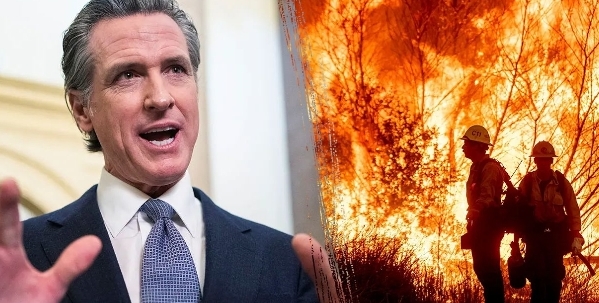
In the aftermath of the devastating wildfires that have ravaged Los Angeles County, California Governor Gavin Newsom has found himself under intense scrutiny from residents who are angry about the state’s response to the crisis. Faced with mounting criticism, Newsom responded by deflecting responsibility, pointing fingers at local leaders and members of his own team. According to Newsom, these individuals failed to provide him with an accurate or timely picture of the severity of the devastation, which he argued contributed to the state’s slower response to the crisis.
The wildfires, which have destroyed thousands of homes and led to significant loss of life, have left residents questioning the government’s preparedness and effectiveness in handling the disaster. Many have expressed frustration over what they perceive as a lack of action and coordination in the face of the fires. Newsom’s response, however, seemed to shift blame away from state officials and toward local leadership, suggesting that the information he was receiving from those on the ground was insufficient for making quick and informed decisions.
In his statements, Newsom emphasized that his administration was not fully aware of the extent of the damage in certain areas until much later in the firefighting efforts. He claimed that local leaders and even members of his own team failed to provide him with clear and accurate assessments of the situation, which he argued led to delays in mobilizing resources and directing assistance to the hardest-hit communities. According to Newsom, this communication breakdown between local and state officials prevented his administration from acting more swiftly and decisively in response to the crisis.
The Governor’s comments have been met with criticism from various quarters, with many questioning whether this was an attempt to deflect blame rather than address the underlying issues that contributed to the wildfires and the state’s response. Critics argue that the Governor’s focus on communication issues is a distraction from the larger problem of inadequate preparation for the devastating fires, which have become a frequent occurrence in California in recent years. There have been growing concerns about the state’s ability to effectively manage wildfire prevention, preparedness, and response, particularly as climate change continues to exacerbate the frequency and intensity of wildfires.
Newsom’s response to the criticism also raises questions about the coordination between local, state, and federal agencies when responding to large-scale disasters. For years, California has struggled with managing the increasing risks posed by wildfires, with many experts calling for more robust fire prevention strategies, improved communication systems, and better resource allocation to tackle the growing threat. Newsom’s comments about the lack of clear information from local leaders and his own team highlight a potential breakdown in communication that could have worsened the state’s ability to respond quickly and effectively.
Furthermore, Newsom’s response has prompted calls for greater accountability from both local and state officials. Some residents and political opponents argue that it is not enough to blame others when lives and property are at stake. They point to the fact that Newsom, as the state’s top elected official, holds ultimate responsibility for the state’s response to disasters. His ability to coordinate resources, oversee emergency responses, and communicate effectively with the public are key aspects of his leadership. Critics contend that deflecting blame onto others only adds to the frustration and confusion felt by residents who are already grappling with the devastation caused by the wildfires.
Additionally, Newsom’s deflection of responsibility has led to questions about whether the state’s budgetary priorities are in line with the needs of wildfire prevention and recovery efforts. In recent months, Newsom has faced criticism for cutting funds for firefighting and disaster preparedness, even as the state has committed billions of dollars to other climate-related projects. These budget decisions have raised concerns about the allocation of resources and whether sufficient funding has been directed toward addressing the growing threat of wildfires in California.
As the fires continue to burn and communities begin the long process of recovery, Newsom’s response to the crisis and his shifting of blame to local leaders and his team are likely to remain points of contention. Many residents are looking for concrete actions and solutions to ensure that the state is better prepared for future wildfires. Calls for improved communication, better resource allocation, and more comprehensive wildfire prevention programs are expected to grow louder in the coming months. For now, however, Newsom’s deflection of responsibility appears to have done little to quell the anger and frustration that residents are feeling in the wake of this devastating disaster.
“Governor Newsom Deflects Blame for Wildfire Response, Points to Communication Failures”
- Advertisement -
- Advertisement -
