

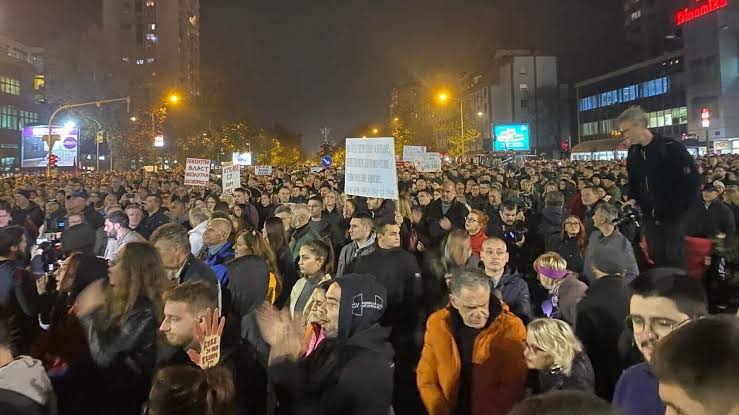
In a massive display of public outrage, tens of thousands of people gathered in the streets of Belgrade to participate in an anti-government protest sparked by the tragic Novi Sad railway station disaster. The incident, which has left the nation grappling with grief and unanswered questions, has fueled anger toward government authorities, who are being accused of negligence and mismanagement in the wake of the catastrophe.
The protest, one of the largest in recent years, brought together a diverse cross-section of Serbian society. Citizens from all walks of life, including students, workers, activists, and families, marched through the streets of Belgrade, united in their demand for accountability and justice. Carrying banners with slogans such as “No more excuses” and “Lives over profit,” the demonstrators voiced their frustration with what they perceive as systemic failures in governance and infrastructure maintenance.
The Novi Sad railway station disaster, which triggered this massive outpouring of public dissent, involved a major accident that resulted in significant casualties. While the exact details of the tragedy are still under investigation, preliminary reports suggest that outdated infrastructure and lack of proper safety measures may have contributed to the incident. The disaster has underscored broader concerns about the state of Serbia’s public services and the government’s ability to ensure the safety and well-being of its citizens.
For many protesters, the railway station tragedy was the tipping point in a long-standing series of grievances. Critics of the government argue that years of corruption, inefficiency, and neglect have eroded public trust and compromised essential services. The opposition has pointed to the incident as a glaring example of the consequences of prioritizing political interests over public welfare.
As the protest unfolded, demonstrators gathered in front of key government buildings, chanting demands for resignations and reforms. Leaders of various opposition groups addressed the crowd, calling for immediate action to address the systemic issues that led to the disaster. “This tragedy was preventable,” one speaker declared. “It is a direct result of years of neglect and corruption. We will not stay silent while lives are lost.”
The government, however, has responded by urging patience and emphasizing the need for a thorough investigation into the railway disaster. Officials have promised to hold those responsible accountable and to implement measures to prevent similar tragedies in the future. However, these assurances have done little to quell public anger. Many citizens view the government’s response as too little, too late, and are demanding tangible action rather than promises.
The protest has also highlighted the growing discontent with broader issues in Serbian society, including economic inequality, unemployment, and limited freedom of expression. Many participants expressed frustration not only with the specific circumstances of the railway station disaster but also with what they see as a culture of impunity and disregard for public concerns.
Observers have noted that this wave of protests may signal a turning point in Serbian politics. The scale and intensity of the demonstrations suggest a deep and widespread dissatisfaction with the current administration. Some analysts believe that the protests could lead to significant political changes, especially if the government fails to address the protesters’ demands effectively.
As the night wore on, the protesters vowed to continue their movement until concrete changes are implemented. Organizers have announced plans for further demonstrations in the coming weeks, aiming to maintain pressure on the government. For the families affected by the Novi Sad railway station disaster, the protests represent a collective cry for justice and an end to preventable tragedies.
The events in Belgrade have drawn international attention, with global leaders and human rights organizations expressing concern about the situation in Serbia. Many have called on the government to listen to its citizens and take immediate steps to address their grievances. For now, the streets of Belgrade remain filled with voices demanding accountability, justice, and change in the wake of a national tragedy.
- Advertisement -
- Advertisement -
