

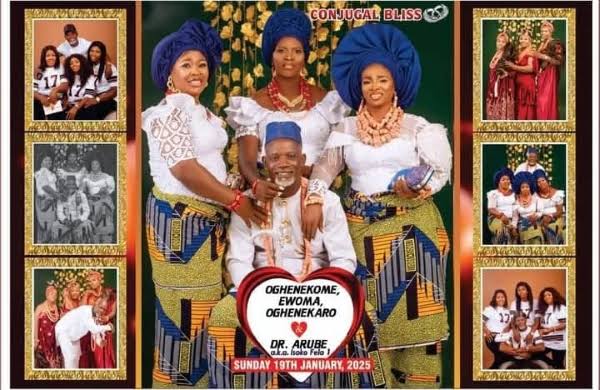
A musician from Delta State, Nigeria, is preparing for a highly unconventional and widely anticipated event: marrying three women on the same day. This extraordinary decision has gained significant attention, stirring up both curiosity and debate across local communities and social media platforms. While polygamy, the practice of a man marrying more than one woman, is not uncommon in certain parts of Nigeria, the idea of marrying three women simultaneously is rare and has made this wedding even more remarkable.
Polygamy has long been practiced in some Nigerian cultures, where it is often viewed as a symbol of wealth, social status, and cultural heritage. In these communities, a man who has multiple wives is often seen as a person of influence and prosperity. However, the practice has been met with mixed reactions, especially in more urban and progressive areas, where there is a growing emphasis on gender equality and individual rights. Critics argue that polygamy can lead to gender inequality, emotional strain, and interpersonal conflicts within families. Despite this, it continues to hold cultural significance in certain regions, particularly among some ethnic groups that view it as an important tradition.
The musician’s decision to marry three women on the same day has drawn attention not only because of its scale but also due to the public nature of the event. This musician, who has gained fame for his contributions to the local music scene, is now the subject of widespread discussion. His choice has raised questions about the motivations behind such a bold and unconventional action. Some view it as a personal or cultural choice, while others wonder if it is a statement on tradition or simply a reflection of his social standing. His public persona has undoubtedly played a role in amplifying interest in the wedding, making it more than just a private affair but a public spectacle.
In many parts of Nigeria, the practice of polygamy is still culturally accepted and legally recognized. It is often seen as a way to strengthen familial ties and extend family networks, especially in rural areas where large families are common. The decision to marry multiple women, however, is not without its challenges. Questions about the emotional dynamics between the wives, how they will navigate their relationships with one another, and the long-term sustainability of such an arrangement have been raised. While some believe that polygamous marriages can be harmonious, others point out the potential for rivalry and tension among the wives.
The reactions of the three brides involved in this wedding are of particular interest. While polygamous marriages are customary in some cultures, the public nature of this particular union adds an element of curiosity. The brides have not yet publicly commented on their reasons for agreeing to such an arrangement, and their silence has only intensified speculation. Some are wondering whether the women are embracing the marriage as a cultural tradition, while others wonder if the musician’s fame and influence played a role in their decision. The lack of transparency from the brides has left many people questioning the true motivations behind this highly publicized wedding.
This event also raises broader questions about the role of tradition in modern Nigerian society. As the country becomes more urbanized and connected to the global community, the practice of polygamy is increasingly being scrutinized. On one hand, traditionalists argue that polygamy is an important aspect of their cultural identity and should be preserved. On the other hand, there is growing support for more progressive and egalitarian forms of marriage that challenge the status quo. The musician’s decision to marry three women simultaneously brings these competing values to the forefront, sparking debates about the relevance of such practices in today’s world.
The media coverage of the wedding is expected to intensify as the date approaches, with journalists and social media users eager to capture every detail. This event has already become a topic of national discussion, and it is likely that the wedding will be remembered for years to come as a symbol of the tension between tradition and modernity. Whether the marriage will be celebrated as a triumph of cultural heritage or seen as a controversial reminder of outdated practices remains to be seen. However, one thing is certain: the musician’s decision has garnered significant attention and will continue to fuel discussions about the role of polygamy in contemporary Nigerian society.
Musician from Delta State Set to Marry Three Wives on the Same Day, Drawing Widespread Attention
- Advertisement -
- Advertisement -
