

Israeli airstrikes in the southern Gaza Strip have resulted in at least 10 deaths and numerous injuries, according to hospital workers. The strikes come amid ongoing tensions between Israel and Palestinian factions, further worsening the already dire humanitarian situation in Gaza. The region, long affected by a blockade, has faced cycles of violence that continue to take a heavy toll on its population.
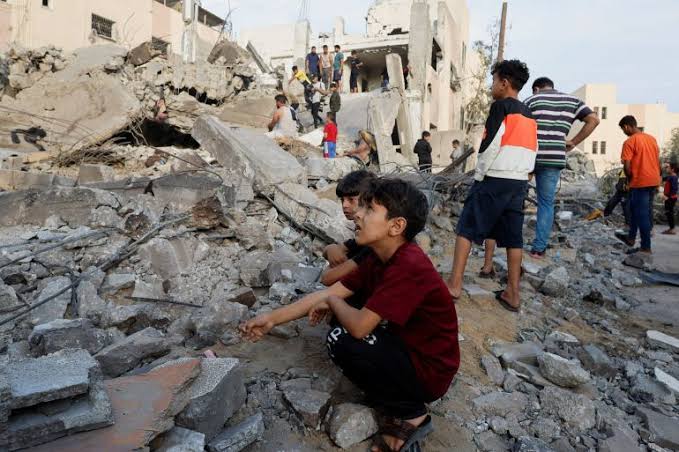
The airstrikes were reportedly part of a military operation by the Israeli Defense Forces (IDF) aimed at targeting militant infrastructure and responding to rocket fire from Gaza. Areas such as Khan Younis and Rafah, located in southern Gaza, were heavily affected, with many buildings destroyed and civilians caught in the crossfire. The casualties included women and children, highlighting the indiscriminate nature of the violence.
Eyewitnesses have reported scenes of chaos, with families fleeing their homes to find shelter in overcrowded schools or with relatives. Gaza’s healthcare system, already overwhelmed due to shortages of medical supplies and staff, is struggling to handle the large number of injured individuals. Hospitals are at capacity, and the infrastructure, already fragile due to the blockade, is buckling under the pressure.
The international community has voiced concern over the escalating violence. The United Nations and other human rights organizations have called for both sides to de-escalate and for the protection of civilians. Diplomatic efforts, particularly by Egypt and Qatar, to mediate a ceasefire are ongoing, but progress remains slow, with little hope for a rapid resolution.
For years, Gaza has been subjected to a harsh blockade imposed by Israel and Egypt, which has limited access to basic necessities such as food, medicine, and fuel. This has led to widespread poverty and a deteriorating economy, leaving the population vulnerable during times of heightened conflict. Aid organizations have warned that without immediate intervention, the situation will worsen, potentially leading to a full-scale humanitarian disaster.
The conflict between Israel and Palestinian factions is deeply rooted in historical, political, and territorial disputes. While Israel maintains that its military operations are necessary to protect its citizens from militant attacks, Palestinians view these actions as excessive and as a form of collective punishment. The ongoing expansion of Israeli settlements in the West Bank and the lack of progress in peace talks have further inflamed tensions, making any resolution seem distant.
The people of Gaza, particularly children, continue to bear the brunt of the violence. Many young people have grown up in an environment of fear and instability, with limited access to education, healthcare, and basic needs. The latest wave of violence has forced many families from their homes, adding to the hardships they already face.
Experts warn that without addressing the core issues fueling the conflict, including the blockade, the division between Palestinian factions, and the lack of a clear peace process, cycles of violence will continue. The two-state solution, which has long been seen as a potential pathway to peace, has made little progress in recent years, and both sides remain entrenched in their positions.
As the situation in Gaza worsens, international humanitarian aid is urgently needed to help those affected by the violence. However, without a lasting ceasefire and renewed efforts for peace, relief efforts can only provide temporary assistance. Until meaningful negotiations take place, the people of Gaza will continue to suffer the devastating consequences of this long-running conflict.
- Advertisement -
- Advertisement -
